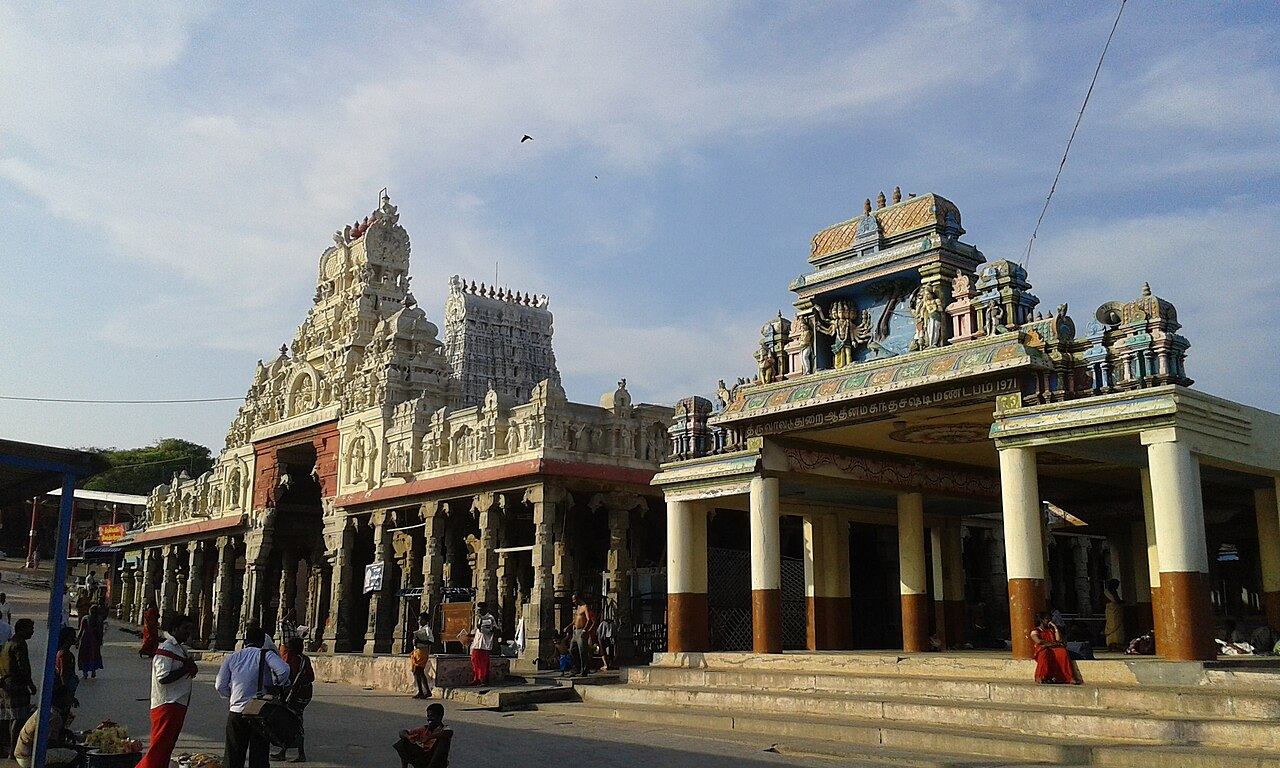
The temple in brief
Arulmigu Subramaniya Swamy Temple stands on the eastern edge of the town of Tiruchendur in Thoothukudi district, Tamil Nadu, directly on the shore of the Gulf of Mannar arm of the Bay of Bengal. It is dedicated to Lord Murugan — also known as Subramaniya, Skanda, Kartikeya, Kumaran and, in this temple above all, Senthil Andavar.
It is the second of the Arupadai Veedu, the six battle-camps or sacred abodes of Murugan praised in Tamil devotional literature, and the only one of the six built on a seashore. The temple is open every day of the year from 4:00 AM to 9:00 PM and draws pilgrims from across Tamil Nadu, the rest of India, Sri Lanka, Malaysia, Singapore and the global Tamil diaspora.
- Deity
- Lord Murugan as Subramaniya Swamy (Senthil Andavar)
- Consorts
- Valli and Deivanai (Devasena)
- Mount and flag
- Peacock (mayil) and rooster (seval)
- Weapon
- The Vel, the divine spear
- Sacred waters
- The sea and the Nazhi Kinaru spring well
- Postal address
- Arulmigu Subramaniya Swamy Temple, Tiruchendur, Thoothukudi District, Tamil Nadu 628215
Senthil Andavar, the presiding deity
In the main sanctum (the moolasthanam) Murugan faces east, towards the sea. He is shown not as the warrior with spear and peacock familiar from calendar art, but as a young ascetic in worship. Temple tradition holds that after defeating Soorapadman, Murugan worshipped his father Lord Shiva here, and a set of Shiva lingams is venerated in the sanctum behind the deity in memory of that act of worship.
The festival deity (utsavar) is Shanmukhar, Murugan with six faces and twelve arms, accompanied by Valli and Deivanai. Shanmukhar has his own shrine, and it is this form that is taken out in procession during the great festivals of Masi and Avani, when he is adorned on successive days in red, white and green, the colours associated with Shiva, Brahma and Vishnu.
Around the two main shrines are subsidiary shrines and sannidhis to Lord Vinayaka, Lord Shiva and the goddess, Perumal (Vishnu), the Navagrahas and others, as well as the flag mast (dhwajasthambam) and the peacock and rooster emblems of Murugan.
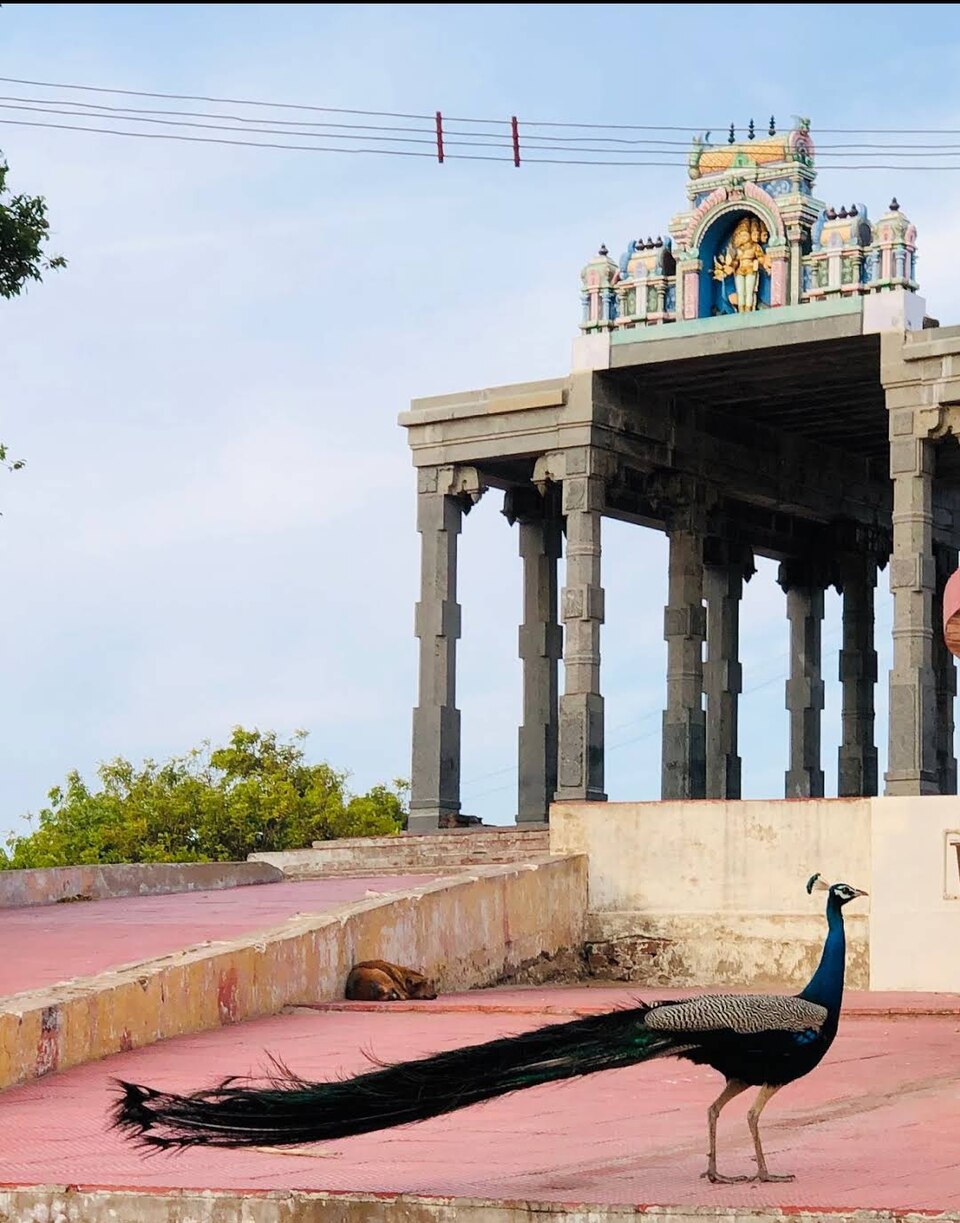
The many names of Tiruchendur
The town and temple have been known by several names over two thousand years. Knowing them helps when reading old texts, hymns and inscriptions:
- Thiruchiralaivai (திருச்சீரலைவாய்) — “the sacred place of the gentle waves”, the name used in Sangam literature, including Nakkeerar’s Thirumurugatrupadai.
- Jayanthipuram — “the city of victory”, recalling Murugan’s triumph over Soorapadman.
- Senthil / Senthilampathi — from which the deity takes the name Senthil Andavar and Senthilnathan.
- Kadarkarai Andi — “the ascetic of the seashore”, a loving name used by devotees and listed on the official temple website.
- Tiruchendur / Thiruchendur — the modern name; both spellings are in common use, and this guide uses both.
Tiruchendur among the six abodes of Murugan
The six abodes (Arupadai Veedu) are the places where, in Tamil tradition, Murugan’s armies camped or where he revealed a particular aspect of himself. Many devotees try to visit all six in a single pilgrimage:
- Thiruparankundram, near Madurai — where Murugan married Deivanai.
- Tiruchendur — the seashore camp before and after the victory over Soorapadman.
- Palani (Thiru Avinankudi) — Murugan as Dandayudhapani, the renunciate.
- Swamimalai — where Murugan taught the meaning of Om to his father Shiva.
- Thiruthani — where Murugan came to rest after the war and married Valli.
- Pazhamudircholai, near Madurai — Murugan with Valli and Deivanai in a forest hill.
Our article on the six abodes of Murugan explains the significance of each and how to plan a circuit that includes Tiruchendur.
How the temple is administered
The temple is a public religious institution under the Tamil Nadu Hindu Religious and Charitable Endowments (HR&CE) Department, managed by an executive officer appointed by the department together with a board of trustees. The department publishes the temple’s timings, festival schedule, online services and donation details on the official temple website.
Recent milestones include ISO certification of the temple’s management systems in 2016 and a large-scale renovation of the temple and its surroundings that began in 2022. The renovation culminated in the Maha Kumbabishekam (consecration) on 7 July 2025, the first in sixteen years.
For bookings, donations and official announcements, always use the official HR&CE channels. This site does not sell tickets, accept money or represent the temple administration.
About this guide and who writes it
Thiruchendur Murugan Temple (thiruchendurmurugantemple.com) is an independent, non-commercial information guide published by the Thiruchendur Murugan Temple Guide Editorial Team. It exists for one reason: pilgrims planning a visit to Tiruchendur deserve clear, accurate and complete information in one place, without having to piece it together from forums and out-of-date posts.
How we research
- Official sources first. Opening hours, festival-day timings, queue rules and announcements are taken from the HR&CE temple website and temple notices.
- Cross-checked history. Historical and mythological content is compared across the Kanda Puranam, Tamil devotional literature, temple publications and reputable secondary sources such as encyclopaedias and newspapers. Where traditions differ, we say so.
- Practical knowledge from visits. Advice on queues, crowds, the sea bath and getting around comes from visits to Tiruchendur and from pilgrims who write to us, and is re-checked when rules change.
- Dated reviews. Every page shows when it was last reviewed. We re-check timings before each major festival.
Our independence
We are not affiliated with the temple, the HR&CE Department or any tour operator, hotel or priest. We do not carry paid placements. If that ever changes, it will be clearly labelled. Read the full editorial policy.
Corrections
If you spot an error or a change in rules, please contact us. We aim to verify and correct reported errors within seven days, and we note significant corrections on the page concerned.
Questions devotees ask
Is this the official website of Tiruchendur temple?
No. This is an independent guide. The official website is run by the Tamil Nadu HR&CE Department at tiruchendurmurugan.hrce.tn.gov.in.
Who is the main deity at Tiruchendur?
Lord Murugan in the form of Subramaniya Swamy, lovingly called Senthil Andavar. The festival deity is Shanmukhar, the six-faced form of Murugan with Valli and Deivanai.
Why is Tiruchendur the only abode of Murugan on the seashore?
In the Kanda Puranam, Tiruchendur is where Murugan camped on the shore before crossing the sea to fight Soorapadman, and where he returned to worship Shiva after his victory.
Sources
We check every fact on this page against the sources below. If something has changed, please tell us.
- Arulmigu Subramania Swamy Temple, Tiruchendur — official website (Tamil Nadu HR&CE Department)
- Tamil Nadu Hindu Religious & Charitable Endowments Department
- Subramaniya Swamy Temple, Tiruchendur — Wikipedia
- Arupadaiveedu — Wikipedia
- Consecration of Tiruchendur Murugan temple held after 16 years — Deccan Herald, July 2025